Creative Approaches to Engaging Students in Active Learning
28 February 2026
Education isn't just about memorizing facts; it's about understanding, applying, and interacting with knowledge. Traditional methods like lectures and rote memorization can often leave students disengaged and unmotivated. Active learning, however, transforms the classroom into an interactive space where students participate in their learning journey.
But how do educators make learning truly engaging? Let's dive into some creative approaches that can help students stay actively involved in their education. 
What is Active Learning?
Active learning is an instructional approach that encourages students to engage directly with the material rather than just passively receiving information. This method focuses on participation, discussion, problem-solving, and hands-on activities to enhance comprehension and retention.Studies show that students who participate in active learning are more likely to retain information longer and develop critical thinking skills. But the challenge lies in how to make it exciting and effective. 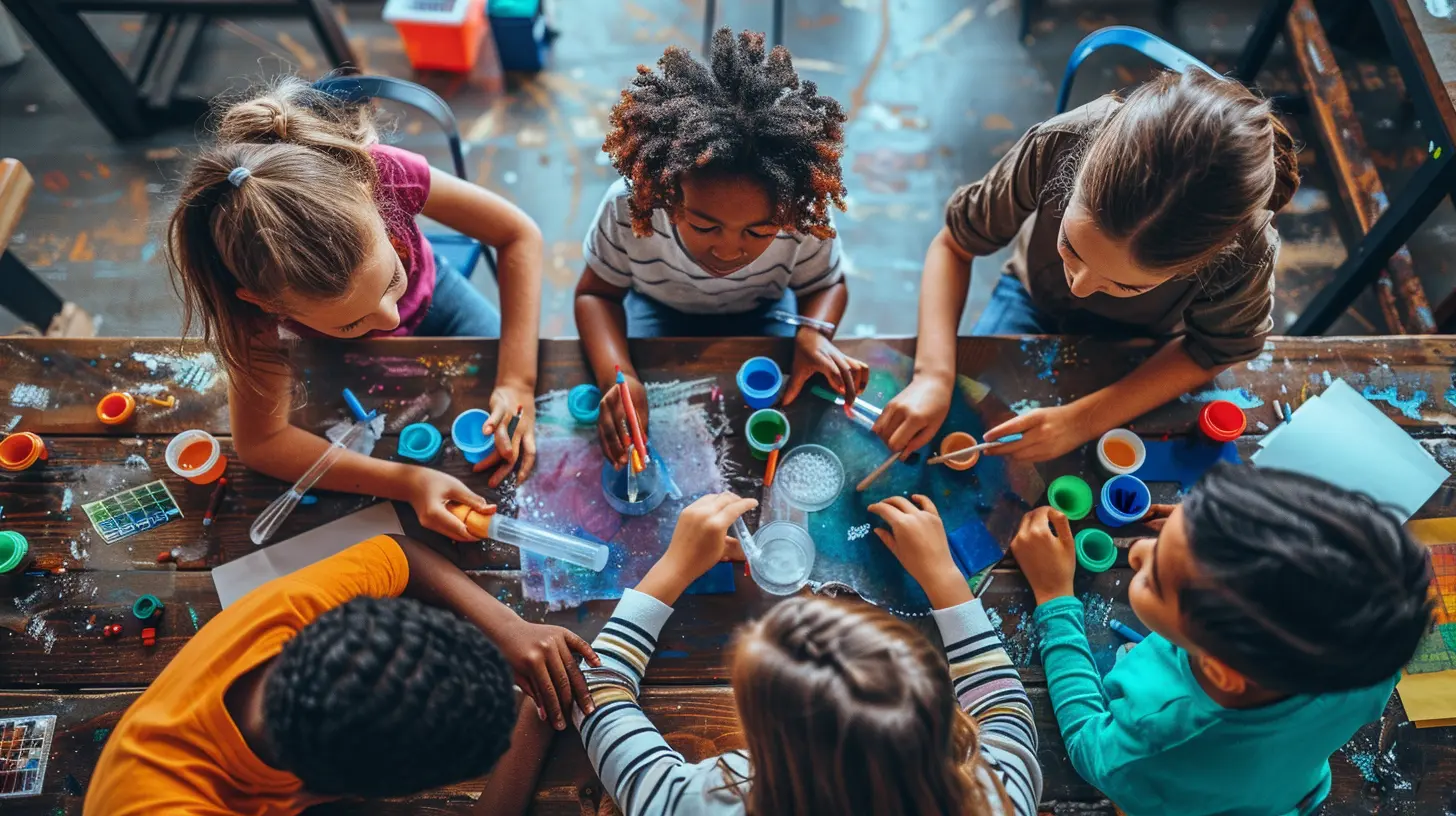
1. Gamification: Turning Learning into a Game
Who doesn’t love a good game? Gamification integrates game-like elements into learning to boost motivation and engagement. Points, leaderboards, badges, and interactive challenges create a competitive but fun environment where students feel encouraged to participate.How to Implement Gamification:
- Quizzes with a Twist – Use apps like Kahoot! or Quizizz to create fun, competitive quizzes.- Classroom Challenges – Reward students with points for achievements, such as completing assignments early or contributing to discussions.
- Escape Room Activities – Design puzzles where students must solve subject-related problems to "escape" a challenge.
Gamification fosters collaboration and enthusiasm, making learning feel more like an adventure than a chore. 
2. Project-Based Learning: Making Knowledge Practical
Students often ask, “When will I ever use this in real life?” Project-based learning (PBL) answers that question by allowing students to work on real-world problems. Instead of just reading about concepts, they apply them to hands-on projects.Examples of PBL:
- Science Experiments – Have students design and conduct their own experiments based on class theories.- Business Simulations – Ask students to create a mock business, giving them experience in budgeting, marketing, and problem-solving.
- Community Projects – Encourage students to identify a local issue and plan a solution, fostering civic responsibility.
By engaging with actual tasks, students build problem-solving skills and deepen their understanding of the subject matter. 
3. Storytelling: Making Lessons Memorable
Storytelling is one of the oldest and most effective ways to teach. It sparks curiosity, builds emotional connections, and helps students retain information longer. A well-told story can turn even the driest subject into an exciting adventure.Ways to Incorporate Storytelling:
- Personal Anecdotes – Sharing real-life experiences makes lessons more relatable.- Historical Narratives – Instead of just listing dates and events, tell history as a story full of drama, characters, and twists.
- Student-Created Stories – Have students develop creative stories that incorporate key concepts from lessons.
When students see learning as a series of fascinating narratives rather than mere facts, they stay engaged and eager to explore more.
4. Role-Playing: Walking in Someone Else’s Shoes
Role-playing encourages students to step into different perspectives, making learning more engaging and immersive. Whether it’s acting out historical events or simulating real-life scenarios, this approach makes students active participants in their learning.Examples of Role-Playing Activities:
- Historical Figures Debate – Assign students famous historical figures and have them debate key issues from history.- Mock Trials – In subjects like law or ethics, students can role-play as lawyers, judges, and witnesses.
- Job Simulations – Students can take on roles such as doctors, journalists, or engineers to understand real-world applications of academic concepts.
Role-playing boosts confidence, enhances critical thinking, and improves communication skills—important traits for success in and beyond the classroom.
5. Flipped Classrooms: Reinventing Homework
The traditional classroom model involves teachers lecturing in class and students doing homework at home. A flipped classroom reverses this concept: students learn new material at home (through videos, readings, or online modules), and class time is used for discussions, activities, and problem-solving.Benefits of a Flipped Classroom:
- More interaction – Instead of passive listening, students engage in meaningful discussions.- Personalized learning – Students can learn at their own pace before coming to class.
- Better understanding – Class time is spent clarifying concepts through activities rather than just listening to lectures.
By flipping the classroom, teachers create an environment where students actively participate in their learning process rather than simply absorbing information.
6. Hands-On Learning: Learning by Doing
One of the best ways to engage students is to get them actively involved through hands-on activities. This type of learning works well in subjects that require real-world application, like science, math, and engineering.Hands-On Learning Techniques:
- Experiments & Lab Work – Science comes to life when students conduct experiments themselves.- Building & Creating – Engineering and math concepts can be better understood through model-building and hands-on problem-solving.
- Art Projects – Even in subjects like literature or history, students can create visual art to express their understanding.
By physically engaging with the material, students develop a stronger grasp of abstract concepts and retain knowledge more effectively.
7. Think-Pair-Share: Encouraging Peer Learning
Think-Pair-Share is a simple yet powerful strategy that encourages students to reflect, discuss, and articulate their thoughts.How It Works:
1. Think – Students consider a question or problem on their own.2. Pair – They discuss their ideas with a partner.
3. Share – Pairs present their thoughts to the larger group.
This strategy ensures that every student participates rather than just a few vocal ones. It also helps shy students find their voice in a low-pressure setting.
8. Technology Integration: Engaging the Digital Generation
Students today are digital natives, and incorporating technology into learning can significantly boost engagement.Ways to Use Technology in the Classroom:
- Virtual Reality (VR) – Take virtual field trips to historical sites or scientific locations.- Online Collaboration Tools – Use platforms like Google Docs or Padlet to encourage teamwork.
- Educational Apps & Videos – Resources like TED-Ed and Khan Academy make complex topics more accessible.
By making use of digital tools, educators create an interactive and dynamic learning environment that resonates with today’s students.
Final Thoughts: Why Active Learning Matters
Gone are the days of monotonous lectures and passive note-taking. Today, education demands engagement, interaction, and creativity. By incorporating these active learning strategies—gamification, storytelling, project-based learning, role-playing, flipped classrooms, hands-on activities, peer collaboration, and technology—teachers can spark curiosity, deepen understanding, and make learning a truly enjoyable experience.After all, learning isn’t just about absorbing information; it's about experiencing, questioning, and discovering. So why not make it fun along the way?
all images in this post were generated using AI tools
Category:
Teaching StrategiesAuthor:

Charlotte Rogers
Discussion
rate this article
4 comments
Alessia Cruz
This article effectively highlights the importance of innovative strategies in fostering active learning. By integrating creativity into educational practices, educators can stimulate student engagement, encourage critical thinking, and enhance retention. Such approaches not only make learning enjoyable but also prepare students for real-world challenges.
March 11, 2026 at 2:06 PM
Charlotte Rogers
Thank you! I'm glad you found the article insightful. Emphasizing creativity is key to enriching the learning experience and equipping students for future challenges.
Georgia Hardy
Unlock the secrets of student engagement—where unexpected techniques spark curiosity and transform classrooms into dynamic learning adventures. What’s your magic method?
March 2, 2026 at 1:38 PM
Charlotte Rogers
One magic method is gamification—integrating game elements into lessons to boost motivation and participation, turning learning into an exciting challenge!
Fennec Cruz
Unlock the minds, spark the hearts; in vibrant classrooms, creativity ignites, and learning truly starts.
March 1, 2026 at 12:51 PM
Charlotte Rogers
Thank you! Your words beautifully capture the essence of fostering creativity and engagement in the classroom. Let’s continue to inspire and ignite passion for learning!
James Shaffer
Inspired minds ignite when creativity dances in learning's embrace.
March 1, 2026 at 5:35 AM
Charlotte Rogers
Thank you! I love how you captured the essence of creativity in learning—it's all about sparking inspiration and engagement!