Montessori Math: Building Strong Foundations Through Concrete Learning
13 April 2026
Have you ever watched a child joyfully stack colorful blocks or carefully arrange beads on a string? To the untrained eye, it might just look like playtime, but in the Montessori world, that’s math in action — real, hands-on, brain-boosting math!
Welcome to the wonderful world of Montessori Math, where little hands touch, move, and explore the world of numbers, turning abstract ideas into something they can feel. It's not about worksheets or rote memorization. Nope! It's all about building a true connection with numbers right from the start.
So, grab a cup of coffee (or juice box if you're sitting with a little one!), and let's dive into how Montessori math builds rock-solid foundations through concrete learning. Trust me, this isn't your typical math class.
What Exactly Is Montessori Math?
Before we get into the nuts and bolts, let’s clear up the basics. Montessori math is part of the broader Montessori method developed by Dr. Maria Montessori over a hundred years ago. It's all about respecting a child’s natural development and curiosity. When it comes to math, that means going from the concrete to the abstract in a very intentional, hands-on way.Instead of just seeing "4 + 3" written on a piece of paper, children feel and see what four looks like, what three looks like, and how together they become seven.
It’s like giving numbers a personality. Suddenly, math is no longer scary — it’s actually kinda fun!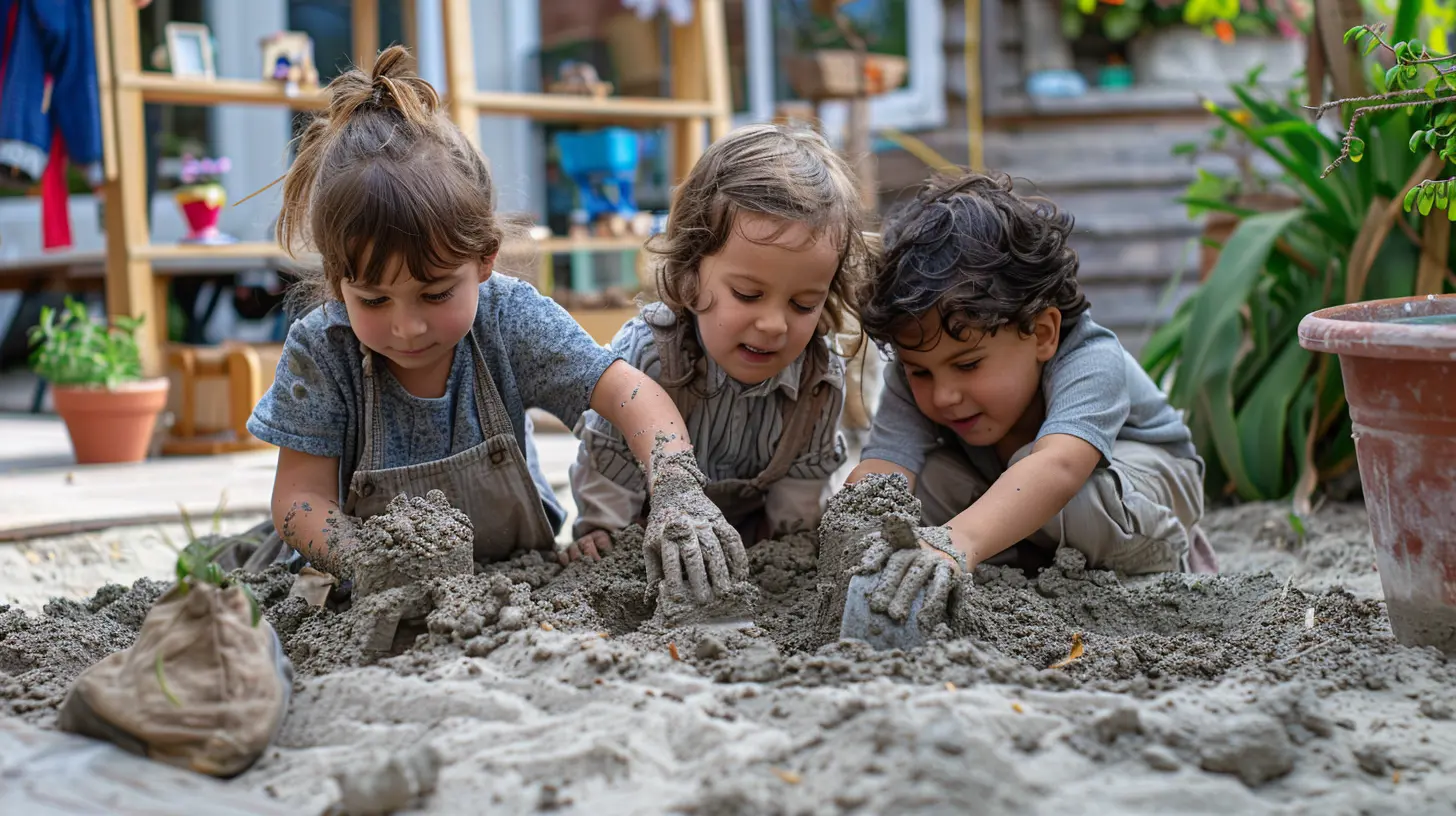
Why Concrete Learning Works Like Magic 🧠✨
Let’s be honest: most of us were taught math in a pretty dry way. Memorize your times tables. Repeat. Cry a little. Repeat again.In Montessori, things are different. Rather than jumping headfirst into abstract symbols, kids start with materials they can touch and manipulate. Think beads, rods, spindles—stuff that turns learning into a sensory experience.
Here's Why Concrete Learning Is So Powerful:
- It builds real understanding. Kids don't just know 5 comes after 4 — they see and feel it!- It supports all learning styles. Whether your child is a visual learner, a hands-on learner, or somewhere in between, they’ll get it.
- It grows with the child. Montessori math materials are designed in stages — from super simple to wonderfully complex.
Imagine trying to teach someone how to ride a bike by showing them diagrams. That wouldn't work, right? They need to get on a real bike and feel the balance. Montessori math is the same. It lets kids "ride the math bike" instead of just looking at the pedals.
The Magic Tools of Montessori Math 🔢🧰
Let’s take a closer look at some of the enchanting tools used to turn abstract concepts into awesome “aha!” moments.1. Number Rods
These brightly colored rods are a staple for early learners. They help kids physically measure and compare quantities. The child sees, for example, that "5" is longer than "3," and boom — number sense kicks in.2. Sandpaper Numbers
Feel the number! Literally. These rough-textured numerals are traced with little fingers as children learn to recognize numbers by sight and touch. It's multi-sensory learning at its finest.3. Golden Beads
Want to teach place value and big numbers to a 4-year-old? Give them golden beads! Units, tens, hundreds, and thousands are represented by different bead structures. Kids build actual numbers, understanding their value from the inside out.4. Spindle Boxes
This one's a game-changer for teaching the concept of zero. Children place the right number of wooden spindles in each box and realize pretty quickly that the “0” box stays empty. Mind. Blown. 💥5. Stamp Game
When kids are ready to transition from golden beads to more abstract math, the Stamp Game steps in. It mimics the bead values but flattens them into tiles. It’s like the bridge from concrete to abstract.
How Montessori Math Builds Strong Foundations Brick by Brick
Now, let’s talk about outcomes. What do we want at the end of the day? Confident, curious, math-loving kids.Here’s how Montessori math makes that happen:
1. Deep Number Sense
Kids don’t just recite numbers; they understand them. They know that 8 is two more than 6, that 10 is made of two 5s, and that numbers can be pulled apart and put together in tons of fun ways.2. Place Value Mastery
This is something that trips up older kids in traditional settings. Not so in Montessori. From an early age, children see what a hundred looks like versus a thousand. Place value isn't just a concept — it’s a tangible object they’ve literally built.3. Confident Math Language
Montessori introduces real mathematical terms early on. Words like “unit,” “decompose,” and “multiplication” are part of the regular vocabulary — and since they’ve got hands-on experience to connect to those words, kids use them with confidence.4. Problem Solving Skills
Because kids are encouraged to work at their own pace and figure things out independently, they develop super-strong problem-solving muscles. They’re not afraid to try, make mistakes, and try again. That’s a life skill, folks.5. Love of Learning
This might be the biggest win. When kids feel successful and in control of their learning journey, they grow up loving learning—not just math, but everything. Who wouldn’t want that?The Role of the Montessori Teacher
In case you’re wondering, this isn’t just a “here’s the stuff and go play” situation. Montessori teachers (called guides) are highly trained in observing the child’s readiness and introducing materials at just the right time.They don’t lecture or dominate the classroom. Instead, they:
- Observe and guide, not instruct.
- Encourage independence.
- Respect each child’s unique learning timeline.
It’s kinda like gardening. They don’t force the plant to grow—they give it what it needs and step back.
Common Misconceptions About Montessori Math 😅
Let’s clear the air on a few things.“Montessori Math is too easy.”
False! It’s just taught differently. In fact, many Montessori students are doing advanced work way earlier than their peers—because they get it deeply, not because they’ve memorized the answers.“It’s all play, no structure.”
Actually, Montessori is very structured. The materials are designed with precision, and there’s a specific sequence to how things are introduced. It just doesn’t feel rigid because it’s so child-centered.“Kids won’t be prepared for traditional school.”
Quite the opposite. Montessori kids transition beautifully because they’re confident, self-motivated learners with a rock-solid foundation.Real-Life Examples: Montessori Math in Action
Let’s make it real. Here are a couple of cute examples:- Sophie, age 4, counts out 7 golden beads and lays them next to the number card “7.” She smiles and says, “Look! These match.” That’s place value understanding blooming right there.
- Liam, age 6, uses the Stamp Game to solve 243 + 358. He proudly announces the answer after stacking his units, tens, and hundreds. No calculator needed — just a pile of stamps and a whole lot of confidence.
Bringing Montessori Math Home
You don’t need an entire classroom to sprinkle a little Montessori math magic at home. Here’s how you can start:- Use real objects for counting. Pasta, buttons, Legos — anything small and countable works!
- Let them help with cooking. Measuring ingredients is full of math!
- Encourage pattern play with beads, blocks, or even socks!
- Follow their lead. If they're interested in numbers, make math part of your daily chatter.
Remember, math is everywhere. When kids see it as part of life (instead of a scary subject), that’s where the magic happens.
Final Thoughts: The Power of Starting Strong
Montessori math is more than just a teaching method — it’s a mindset. It says, “Let’s respect how kids naturally learn. Let’s make math joyful and meaningful.”When kids start with a solid, hands-on foundation, they don’t just survive math in school — they thrive. They become number detectives, puzzle solvers, and problem-crushers. And it all starts with a few golden beads and a whole lot of curiosity.
So next time you see your child happily counting Legos or sorting marbles, smile big — that’s Montessori math in action.
all images in this post were generated using AI tools
Category:
Montessori EducationAuthor:

Charlotte Rogers
Discussion
rate this article
3 comments
Jude Vasquez
Montessori Math empowers children through hands-on experiences, fostering a deep understanding of numerical concepts. By engaging with tangible materials, students build a solid foundation for abstract thinking, enhancing their problem-solving skills and promoting a lifelong love for learning in mathematics.
May 6, 2026 at 4:24 AM
Charlotte Rogers
Thank you for highlighting the core principles of Montessori Math! I completely agree that hands-on experiences are vital for fostering a deep understanding of numerical concepts and nurturing a lifelong passion for learning.
Zareth Oliver
Montessori Math emphasizes hands-on, concrete experiences that lay a solid foundation for abstract mathematical concepts. By engaging children with tangible materials, they develop essential skills and a deeper understanding of mathematical principles. This approach not only fosters a love for learning but also promotes critical thinking and problem-solving abilities.
April 19, 2026 at 11:51 AM
Charlotte Rogers
Thank you for capturing the essence of Montessori Math! Hands-on experiences truly empower children to grasp abstract concepts and develop essential problem-solving skills.
Aelith Blevins
This article beautifully highlights the importance of concrete learning in Montessori math. By engaging children with hands-on materials, it not only fosters a deeper understanding of mathematical concepts but also cultivates critical thinking and problem-solving skills, ensuring a strong foundation for future learning.
April 14, 2026 at 2:51 AM
Charlotte Rogers
Thank you for your kind words! I'm glad you found the emphasis on hands-on learning in Montessori math to be impactful. It's essential for developing both understanding and critical skills.