Building Critical Thinking Skills Through Classroom Coding Projects
14 December 2025
Ever watched a student light up when they solve a tricky bug in their code? That moment of "Aha!" is more than just tech magic—it's critical thinking in action. In today's world full of smart tech and fast-moving information, critical thinking is not just a skill—it's a superpower. And guess what? Classroom coding projects are one of the best ways to help students develop it.

Why Critical Thinking Matters More Than Ever
We live in a world where answers are just a Google search away. But knowing what to do with that information? That takes critical thinking. It’s about analyzing, evaluating, problem-solving, and making decisions based on logic and reasoning.Let’s face it—memorizing facts doesn’t cut it anymore. Students need to think on their feet, make connections, and come up with solutions. Whether it’s finding the best way to structure an essay or figuring out why a robot isn’t turning left, critical thinking is the secret sauce.
So how can we teach it effectively, without boring our students to death? That’s where coding projects come in.

The Link Between Coding and Critical Thinking
At first glance, coding might seem like a highly technical subject full of jargon and complex logic. But at its core, coding is just structured problem-solving wrapped in digital language. And what is problem-solving if not a workout for your critical thinking muscles?Think about it:
- Coding forces students to break down problems into steps.
- They must identify errors (debugging) and think creatively to fix them.
- Every code snippet is an if-this-then-that scenario, a perfect playground for logic and reasoning.
By engaging with coding, students learn how to approach challenges methodically, test hypotheses, and reflect on different outcomes. In other words, they become little critical thinkers without even realizing it!

Benefits of Classroom Coding Projects
Let’s dive deeper into how classroom coding projects can help build critical thinking while also keeping students excited to learn.1. Encourages Curiosity and Questioning
Coding naturally sparks curiosity. Why didn’t the sprite move? What happens if I change this variable? Each line of code becomes a puzzle.When students start asking "What if?" and "Why not?"—you know they’re thinking critically. Coding invites them to experiment and push boundaries, essential habits of mind for lifelong learners.
2. Promotes Logical Thinking
Coding is all about logic. If this happens, then do that. Every decision must follow a pattern. When students code, they start thinking like mini-computers—systematically, step-by-step, and with precision.It’s like training their brains to be more organized. They learn to follow procedures, anticipate results, and adjust based on outcomes—key elements of strong reasoning skills.
3. Provides Real-Time Feedback
One of the best parts about coding? The instant feedback. Either the code works, or it doesn't. If it fails, students can trace the logic, reflect, and try again.This feedback loop is a critical thinking goldmine. Students have to:
- Analyze what went wrong
- Identify patterns
- Deduce possible fixes
- Test and revise
It’s like a constant conversation between the thinker and the tool.
4. Fosters Collaboration and Communication
Many coding projects, especially in classrooms, are done in pairs or groups. This means students must communicate ideas, negotiate plans, and explain their reasoning.And we know that articulating your thought process is a huge part of critical thinking. By working together, students benefit from diverse perspectives and learn to evaluate different approaches.
5. Builds Resilience and Growth Mindset
Let’s be real. Coding can be frustrating. It’s full of bugs, errors, and confusion. But that’s the beauty of it! When students finally get their code to run after 10 tries, they feel unstoppable.This builds persistence. They learn that failure isn’t the end—it’s just a step in the journey. And each misstep gives them a chance to think harder, try smarter, and grow stronger.
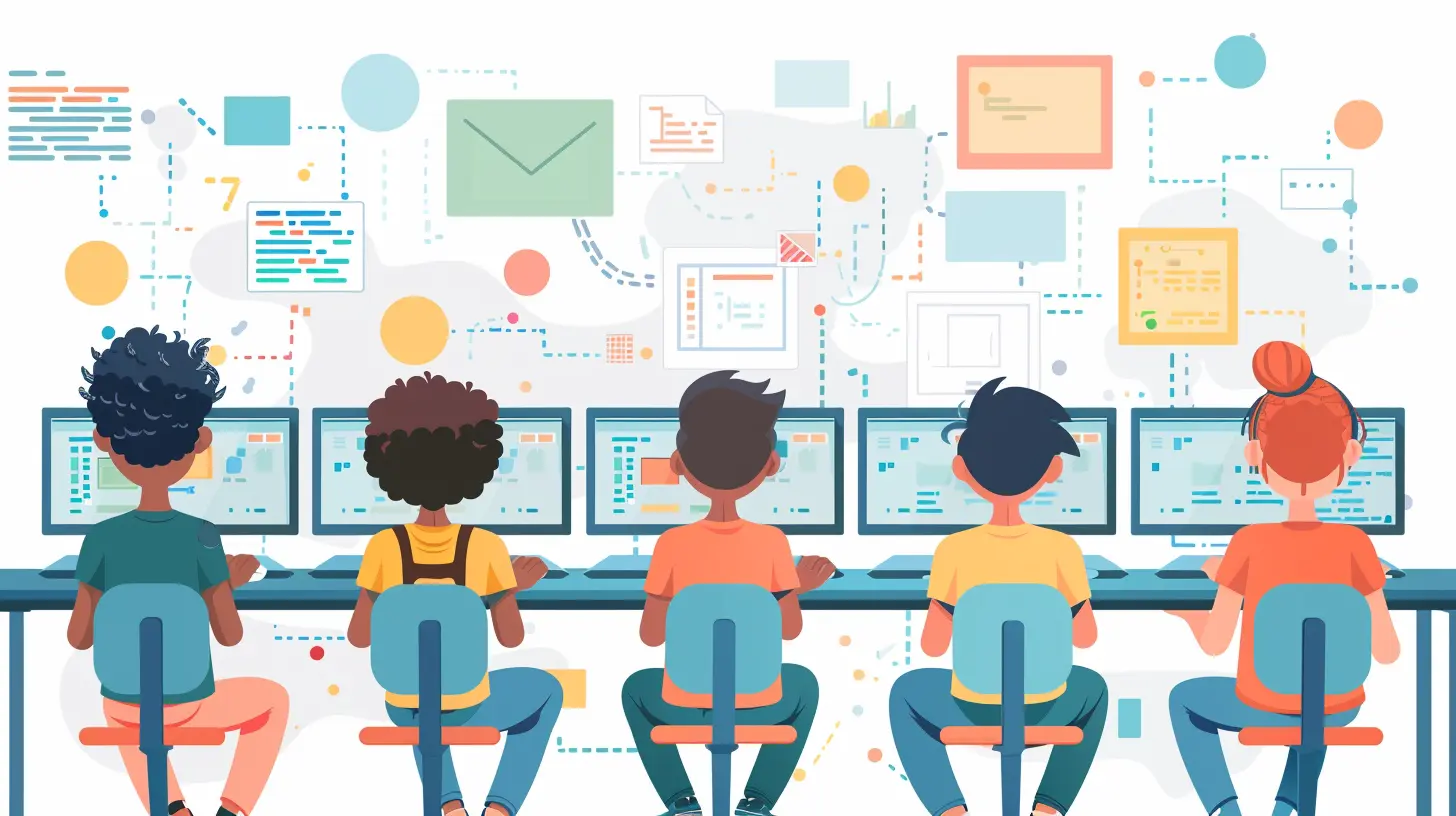
Types of Coding Projects That Boost Critical Thinking
Not all coding projects are created equal. If we want to really nurture critical thinking, we need to go beyond copy-paste solutions. Here are a few project ideas that really make students flex their thinking muscles.1. Game Design Projects
Creating their own game? That’s every kid’s dream! It’s also a fantastic way to build critical thinking. Students must:- Plan game logic (rules and conditions)
- Design interactions and outcomes
- Test and debug gameplay
By thinking through every possibility a player might encounter, students sharpen their anticipation and problem-solving skills.
2. Interactive Storytelling
Tools like Scratch let kids code stories where characters make choices and the ending changes. It’s like a modern Choose-Your-Own-Adventure!This project type teaches sequencing, cause-and-effect reasoning, and creative expression. Students have to think through various paths and outcomes, making decisions based on logic and narrative flow.
3. Real-World Simulations
Want to simulate a weather app, a shopping cart, or a traffic light? These kinds of real-world applications require deep thinking. Students must understand real systems and translate them into logical code.This builds skills in:
- Abstraction
- Conditional logic
- Predictive analysis
It’s where critical thinking and technical skills collide in the most exciting way.
4. Robotics Projects
Combining hardware and software? Now we’re talking! Robotics projects engage students in hands-on critical thinking. They troubleshoot real-world mechanical issues while also debugging their code.Every decision—how far the robot moves, when it turns, what it does on sensing an object—requires careful planning and thoughtful testing.
Integrating Coding into the Curriculum
You don’t have to be a software engineer to bring code into your classroom. In fact, coding activities can enhance nearly every subject. Here’s how:Math Class
Use coding to teach patterns, algorithms, and problem-solving. Students can create programs that solve math problems or visualize data.Science Class
Simulate ecosystems, build weather models, or create chemistry calculators. Coding lets students see science in action and build predictive models.English Language Arts
Have students code interactive stories or character analysis games. They can even create chatbots for creative writing exercises.Social Studies
Let students build timelines, code historical simulations, or create quizzes about geography, history, or government systems.
Tips for Teachers New to Coding
Feeling nervous about adding coding to your class? Don’t worry—you’re not alone. Here are a few practical tips to get you started:- Start small: You don’t need to launch a full-on coding bootcamp. Try using beginner platforms like Scratch, Code.org, or Tynker.
- Let students lead: You’ll be amazed what they can figure out. Create an environment where peer learning is encouraged.
- Celebrate failures: Treat bugs as learning opportunities. Encourage a mindset where challenges are exciting, not scary.
- Connect to real life: Show how coding is behind everything from TikTok to traffic lights. Relevance boosts motivation.
- Keep learning: Join teacher forums, attend PD workshops, or try out code yourself. Grow alongside your students.
Final Thoughts
Critical thinking is the foundation of lifelong learning—and there’s no better way to build it than through classroom coding projects. Whether students are building games, animating stories, or programming robots, every keystroke is a chance to think deeper, reason better, and grow smarter.And you know what? They’ll have a blast doing it.
So, let’s stop thinking about coding as just a “tech skill.” It’s a critical thinking toolkit disguised in curly brackets and semicolons. Let’s use it to ignite curiosity, sharpen minds, and create learners who can think, adapt, and thrive.
Because the future belongs to thinkers. And with coding in our toolkit, we can help every student become one.
all images in this post were generated using AI tools
Category:
Coding In SchoolsAuthor:

Charlotte Rogers
Discussion
rate this article
12 comments
Finnegan McVey
This article effectively highlights how classroom coding projects foster critical thinking by encouraging problem-solving, collaboration, and creativity. By integrating coding with curriculum, educators not only teach technical skills but also enhance students' analytical abilities, preparing them for complex real-world challenges ahead.
January 29, 2026 at 1:11 PM
Charlotte Rogers
Thank you for your insightful comment! I'm glad you found the article highlights the importance of coding in fostering critical thinking and collaboration.
Adeline Patel
Empower minds; coding fuels critical thinking!
December 24, 2025 at 8:38 PM
Charlotte Rogers
Absolutely! Coding not only enhances problem-solving skills but also fosters creativity and logical reasoning, making it a powerful tool for empowering critical thinking in students.
Valencia Lee
Fantastic insights! Coding truly enhances critical thinking in students!
December 24, 2025 at 3:57 AM
Charlotte Rogers
Thank you! I'm glad you found the insights valuable. Coding really does foster critical thinking skills!
Echo Whitley
Great insights! Empowering students through coding not only enhances critical thinking but also fosters creativity and collaboration.
December 23, 2025 at 9:25 PM
Charlotte Rogers
Thank you! I'm glad you found the insights valuable. Empowering students through coding truly transforms their learning experience!
Kane Young
This article highlights an essential approach; coding projects not only enhance technical skills but also significantly boost critical thinking in students.
December 22, 2025 at 12:05 PM
Charlotte Rogers
Thank you! I'm glad you found the connection between coding projects and critical thinking impactful. It truly is a vital aspect of education today.
Georgina Murphy
This article highlights the importance of integrating coding projects into the classroom as a means to enhance critical thinking skills. By engaging students in hands-on problem-solving and logical reasoning, educators can foster creativity and a deeper understanding of complex concepts, preparing them for future challenges.
December 20, 2025 at 4:23 AM
Charlotte Rogers
Thank you for your thoughtful comment! I completely agree that integrating coding projects is vital for developing critical thinking and creativity in students.
Logan McRae
Empowering minds through coding fosters creativity and critical thinking!
December 19, 2025 at 12:29 PM
Charlotte Rogers
Absolutely! Coding not only empowers creativity but also enhances problem-solving skills essential for critical thinking.
Kylie McDonough
What a fantastic read! Integrating coding projects in the classroom not only enhances critical thinking skills but also sparks creativity. It’s inspiring to see how such hands-on experiences can shape young minds. Can’t wait to implement these ideas in my own teaching!
December 18, 2025 at 9:24 PM
Charlotte Rogers
Thank you for your enthusiasm! I'm glad you found the ideas inspiring—excited for you to implement them in your teaching!
Kael Hensley
Integrating coding projects into the classroom not only enhances technical skills but also fosters critical thinking. By solving complex problems and collaborating with peers, students develop essential analytical abilities applicable across disciplines and future endeavors.
December 17, 2025 at 3:46 AM
Charlotte Rogers
Thank you for your insightful comment! I completely agree that integrating coding projects in the classroom not only boosts technical skills but also cultivates critical thinking and collaboration among students, benefiting them in various fields.
Sylas Snow
Empowering students through coding not only enhances their technical skills but also fosters critical thinking, creativity, and collaboration. Let's embrace classroom projects that inspire innovation and prepare our learners for a future full of possibilities!
December 16, 2025 at 12:16 PM
Charlotte Rogers
Thank you for your insightful comment! I completely agree that coding fosters essential skills and innovation in students, preparing them for a dynamic future. Let's keep inspiring learning through projects!
Samuel Pacheco
Coding projects not only enhance technical skills but also foster critical thinking, creativity, and problem-solving abilities in students.
December 16, 2025 at 6:02 AM
Charlotte Rogers
Absolutely! Coding projects offer a practical platform for students to develop essential skills beyond just technical knowledge, promoting critical thinking and creativity in problem-solving.
Lys Yates
Empowering students' problem-solving abilities through coding projects.
December 15, 2025 at 3:57 AM
Charlotte Rogers
Thank you! Coding projects indeed foster critical thinking and enhance students' problem-solving skills effectively.
MORE POSTS

Encouraging Problem-Solving Skills in Preschoolers

Gamification in Education: Turning Learning Into Play

How to Build a Classroom Culture of Respect and Inclusion

How to Tackle Boring Subjects Without Losing Interest

How Mindfulness Helps Students Manage Anxiety and Stress

Coding Competitions: Encouraging Innovation and Collaboration Among Students

Why Coding is the New Literacy for the Digital Generation

How to Succeed in an Online Learning Environment