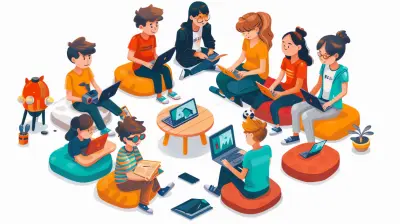
How to Leverage Your Life Experience in the Classroom
26 March 2026
Life is your greatest teacher. Every lesson you've learned, every challenge you've faced, and every skill you've developed can be a powerful tool in the classroom. Whether you're an educator, a student, or even a lifelong learner, your personal experiences shape the way you teach, learn, and engage with others.
But how do you take what you've experienced and turn it into something valuable in the classroom? Let's dive into how you can use your life experiences to enrich education.
Why Your Life Experience Matters
We often think of education as something that happens within the four walls of a classroom. But in reality, learning extends far beyond textbooks and lectures. Your personal journey holds unique insights that can:- Make learning more relatable – Real-life examples bring abstract concepts to life.
- Enhance engagement – Stories and real-world applications make lessons more interesting.
- Develop critical thinking – Sharing personal challenges helps students analyze and problem-solve.
- Build connections – Personal experiences create authentic relationships between teachers and students.
Now that we know why it matters, let's look at how you can apply it effectively.
Using Personal Stories to Teach
1. Turn Your Challenges into Lessons
Have you ever failed at something, only to come out stronger in the end? Maybe you struggled with a subject in school, faced setbacks in your career, or dealt with personal hurdles.Sharing these moments with students shows them that failure isn’t the end—it’s a stepping stone. When a teacher admits to once struggling with math or public speaking, it reassures students that improvement is possible.
👉 Example: If you're teaching problem-solving, share a time when you had to overcome an unexpected obstacle. Let students see how resilience leads to success.
2. Use Real-World Analogies
Sometimes, classroom concepts feel too abstract. If students can't connect with a lesson, they’ll disengage. This is where personal experiences help.Think of ways to relate lessons to real-life situations:
- Teaching economics? Compare budgeting to managing your monthly expenses.
- Explaining biology? Relate it to how you stay healthy and take care of your body.
- Discussing literature? Connect the themes to personal experiences or cultural stories.
When students see that a subject has real-world value, they become more interested.
3. Showcase the Power of Lifelong Learning
Life experiences aren’t just about what you already know—they’re also about what you continue to learn. Show students that learning never stops.Share stories of times when you had to pick up new skills, adjust to changes, or step out of your comfort zone. This encourages students to embrace growth.
👉 Example: If you recently learned a new language, musical instrument, or skill, talk about the challenges and breakthroughs. Help students see that learning is a lifelong journey.

Encouraging Students to Reflect on Their Own Experiences
Your experiences are just one part of the equation. Encouraging students to tap into their own background makes learning even richer.4. Use Personal Reflection Exercises
Ask students to draw connections between lessons and their own lives. This deepens understanding and makes learning personal.👉 Activity Idea: Have students write about a personal experience that relates to a topic you're covering. For example:
- In history: “Describe a moment when you witnessed or experienced a major societal change.”
- In science: “Think about a time when you observed a scientific principle in real life.”
These exercises help students see how learning applies to them directly.
5. Create Peer Sharing Opportunities
Students bring diverse experiences to the classroom. Encourage them to share insights with one another.- Use group discussions for students to exchange personal stories related to the lesson.
- Assign peer projects that incorporate experiences from different backgrounds.
- Encourage storytelling as a way to boost confidence and public speaking skills.
By doing this, you help students appreciate their classmates' unique perspectives.
Making Learning More Engaging with Real-Life Applications
6. Incorporate Hands-On Learning
Some lessons are best understood through action. Instead of only talking about a concept, let students experience it.👉 Examples:
- Teaching business concepts? Have students create a simple business plan.
- Covering environmental issues? Organize a school-wide sustainability initiative.
- Discussing leadership? Have students take charge of small projects.
Bringing learning into real-life contexts makes it more meaningful.
7. Invite Guest Speakers with Unique Perspectives
Your life experiences are valuable, but there are always more perspectives to explore. Bring in guest speakers—entrepreneurs, travelers, scientists, artists—who can share their journeys.Hearing different paths to success and personal growth helps students understand that there isn't just one way to achieve their goals.
8. Use Technology and Multimedia to Enhance Lessons
In the digital age, there's no excuse for a boring classroom. Use videos, podcasts, and online resources to supplement personal experiences.👉 Example: If you're talking about global cultures, show videos from people around the world sharing their everyday lives. This makes lessons feel more immersive.
Overcoming Doubts About Sharing Personal Experiences
Some educators hesitate to bring personal experiences into the classroom. You might wonder:- What if my experiences aren’t relevant?
- What if students don’t relate?
- What if I overshare?
The key is balance. Keep stories short, purposeful, and relevant to the lesson. If a story serves a clear learning objective, it will resonate with students.
Also, be mindful of boundaries. Personal stories should be appropriate for the audience and setting.
Final Thoughts
Your life experiences are more than just memories—they're powerful teaching tools. Whether you're a teacher, mentor, or student, using personal stories, real-world applications, and reflection exercises can transform the way people learn.So, don’t hold back. The next time you step into a classroom, bring your experiences with you. They just might be the key to creating a learning environment that’s engaging, relatable, and unforgettable.
all images in this post were generated using AI tools
Category:
Adult EducationAuthor:

Charlotte Rogers
Discussion
rate this article
4 comments
Harley McKeever
What an intriguing perspective! How can personal anecdotes truly shape student engagement? I'm curious about specific strategies to effectively integrate our life experiences into lessons.
June 23, 2026 at 4:12 AM
Charlotte Rogers
Personal anecdotes can foster relatability and connection, making lessons more engaging. Strategies include sharing relevant stories that relate directly to the content, encouraging students to share their experiences, and using storytelling techniques to illustrate key concepts, which all enhance engagement and understanding.
Roxanne Howard
Thank you for this insightful article! It’s a reminder of the immense value our life experiences bring to teaching. I appreciate the encouragement to share personal stories, as they can foster deeper connections with students. I’m excited to apply these ideas in my classroom to enhance learning and engagement!
March 31, 2026 at 4:50 AM
Charlotte Rogers
Thank you for your thoughtful response! I'm glad you found the article helpful and inspiring. Best of luck in applying these ideas in your classroom!
Antonia Fletcher
This article offers valuable insights on integrating personal experiences into teaching. Authentic connections can enhance student engagement and make lessons more relatable. It's a reminder that our stories can be powerful tools for learning and growth.
March 30, 2026 at 3:13 AM
Charlotte Rogers
Thank you for your thoughtful comment! I’m glad you found the insights on personal connections helpful for enhancing student engagement. Sharing our stories truly can transform the learning experience.
Ariella Banks
Why bring a boring textbook to class when you can share the epic saga of that time you mistook a raccoon for a student? Life experience: it's the ultimate lesson plan—funny stories guaranteed!
March 27, 2026 at 12:39 PM
Charlotte Rogers
Absolutely! Real-life stories engage students and make lessons memorable. Sharing personal experiences not only adds humor but also connects learning to real-world situations.