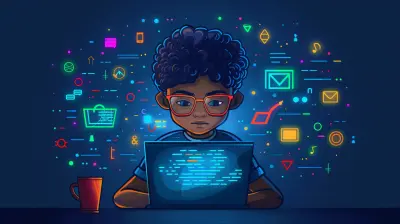
Preparing Students for the Workforce: Coding Skills for Every Career Path
11 June 2026
The world is changing—and fast. From self-driving cars to smart homes and virtual assistants who know more about our schedules than we do, technology is at the heart of everything. But here's the thing: tech isn’t just for techies anymore.
Whether someone wants to be a doctor, a designer, a business owner, or even a farmer, one skill is beginning to pop up as the game-changer—coding. That's right. Knowing how to code is no longer a “nice-to-have.” It's becoming a must-have.
So, how can we prepare students for this brave new world? How do we make sure they’re ready for careers that don’t even exist yet? It all starts with teaching them the language of the future—code.
Let’s break this down and talk about why coding isn’t just for software engineers anymore and how every student, regardless of their career path, can benefit from learning to code.
Why the Workforce Is Changing (And What That Means for Students)
Ever feel like things are moving faster than we can keep up with? The jobs we used to dream of as kids are either gone or totally different now. Automation, artificial intelligence (AI), and big data are reshaping industries from the ground up.Employers want more than just degrees. They want adaptable problem-solvers who understand how technology works. And guess what? Coding teaches exactly that.
Coding is basically the new literacy. Just like reading and writing once opened the doors to opportunity, coding now unlocks the doors to innovation, creativity—and yes—a paycheck.
Busting the Myth: “Coding Is Only for Tech Careers”
Let’s face it—when most people hear the word "coding," they instantly imagine someone in a hoodie, hunched over a laptop in a dark room, probably eating cold pizza.But coding isn’t reserved for the Silicon Valley elite or hardcore hackers. In reality, it’s used in nearly every industry:
- Healthcare: Think health apps, electronic medical records, and AI diagnostics.
- Finance: Behind every budgeting app, investment platform, or fraud-detection system is code.
- Design & Art: Ever created digital animation, AR filters, or interactive media? Yep, that’s code again.
- Agriculture: Smart farming tools use code to monitor soil health, control drones, and predict yields.
- Education: Online learning platforms, gamified lessons, and virtual simulations rely on—you guessed it—coding.
You don’t have to be a full-time programmer to benefit from coding. It’s not about turning every kid into a Silicon Valley engineer. It’s about equipping them with the tools they need to succeed—wherever they go.
The Core Skills Students Learn Through Coding
So what exactly are students gaining when they sit down and start typing out lines of code? It’s not just about writing computer programs. Coding teaches a whole bunch of real-life, transferable skills that employers love.1. Problem-Solving
Coding is basically like playing detective. There’s always a problem to figure out—a bug to squash, a function to fix, a feature to add. Students learn to think critically, break down big issues into smaller parts, and come up with creative solutions.2. Logical Thinking
Computers follow instructions to the letter. That means students have to think step-by-step and anticipate outcomes. It builds a logical brain that’s good for more than just writing code—it’s helpful in law, journalism, science, you name it.3. Creativity and Innovation
You might not think of coding as creative, but it totally is. Want to build a game, design a cool app, or automate your own music playlist? It all starts with code. Coding turns ideas into reality.4. Resilience and Patience
Let’s be real: coding can be frustrating. There are bugs, errors, and all sorts of things that go wrong. But students learn to keep at it. They debug, test, try another way. That builds grit—one of the most underrated success traits out there.5. Teamwork and Communication
A lot of coding projects are team-based. Students learn how to work with others, share ideas, and explain complex tech in simple terms. Trust us—this is a BIG deal in any job.
Starting Early: Why Coding Belongs in K-12 Classrooms
If we want students to be ready for the workforce of tomorrow, we’ve got to start today. And that means planting the seeds early—yes, even in elementary school.Kids are naturally curious. They’re wired to learn by exploring, playing, trying things out. Coding taps into all of that. Programs like Scratch and Code.org make coding accessible and fun, even for the youngest learners.
By the time they reach high school, they don’t just “use” technology—they understand it. They can create it. And that’s powerful.
Plus, early exposure helps break down harmful stereotypes. Girls, students of color, and kids from underrepresented communities often don’t get the same encouragement to pursue tech. Let’s change that.
Practical Ways Schools Can Teach Coding Across All Subjects
Here’s the good news: you don’t need to overhaul the entire school system or turn every class into Computer Science 101. Coding can (and should) be woven into subjects students are already learning.In Math Class
Teach students how to use code to visualize equations, solve puzzles, or simulate probability. It’s a great way to make math interactive and relevant.In Science Labs
Use Python to analyze data from experiments. Or try simulations that model ecosystems, climate change, or population growth.In Social Studies
Build interactive timelines or programs that analyze historical data. Students can even create virtual tours to explore world geography.In English and Arts
Let students write interactive stories, design animations, or build websites to publish their essays and poems. Creativity meets tech!Coding as Career Exploration
When students learn to code, they’re not just picking up a skill—they’re discovering possibilities. Coding opens up a whole world they might not have considered before.Imagine a student who struggles in traditional academics but thrives when building their own app. Or someone who never thought they liked science until they used code to simulate a rocket launch on their laptop.
Coding can be the spark that lights up a student’s passion. It gives them a way to explore careers like:
- Data Analyst
- UX/UI Designer
- Software Developer
- Digital Marketer
- Game Designer
- Cybersecurity Analyst
- Robotics Engineer
…and so many more.
The Role of Teachers and Parents
Educators and parents don’t have to be coders themselves to support students. But they do need to encourage curiosity, and maybe step a little outside their own comfort zones too.There are tons of free resources out there—online courses, coding games, YouTube tutorials, summer camps. What matters most is letting students know it’s okay to try, to mess up, and to keep going.
Support from adults makes a huge difference. A single teacher or parent who says, “I believe in you”—that can change everything.
Preparing for Jobs That Don’t Exist Yet
Here’s a wild thought: the coolest jobs of tomorrow haven’t even been invented yet. Think about how fast things are moving. Ten years ago, no one was talking about drone traffic controllers, virtual reality therapists, or AI ethicists.But here we are.
So how do we get students ready for a future that’s still being written? We give them skills that never go out of style: problem-solving, creativity, tech literacy—and yes, coding.
The Big Picture: Coding Is for Everyone
It doesn’t matter where a student comes from, what career they’re interested in, or how much tech they’ve been exposed to before. Coding is an equalizer. It opens doors.And in today’s world, we need to do everything we can to make sure all students have those doors open to them.
It’s not about turning everyone into a coder. It’s about helping students become creators—not just consumers—in the digital age.
So, let’s stop thinking of coding as some elite skill reserved for a specific group. Let’s start seeing it for what it really is: the language of opportunity.
Final Thoughts: Building a Brighter Future
If we want to truly prepare students for the workforce, we’ve got to meet them where the world is headed. And right now, it’s headed straight into the digital age.Teaching coding isn't just about syntax and semicolons. It's about giving our future workforce the confidence to innovate, adapt, and lead—no matter what path they choose.
Let’s give our students the tools to not just survive in the future—but to shape it.
Because the future doesn’t wait. And neither should we.
all images in this post were generated using AI tools
Category:
Coding In SchoolsAuthor:

Charlotte Rogers
Discussion
rate this article
3 comments
Eliza McVaney
This article highlights the essential role of coding skills across various careers. Equipping students with programming knowledge not only enhances their job readiness but also fosters critical thinking and problem-solving abilities.
June 14, 2026 at 11:46 AM
Charlotte Rogers
Thank you! I'm glad you found the article valuable. Coding skills truly empower students for diverse career paths by enhancing their critical thinking and problem-solving abilities.
Ella McPhail
Integrating coding skills into education empowers students across all career paths, fostering problem-solving abilities and digital literacy essential for future workforce success. A vital investment in their future!
June 13, 2026 at 2:52 AM
Charlotte Rogers
Thank you for your insightful comment! Integrating coding skills truly enhances students' problem-solving abilities and digital literacy, preparing them for diverse career opportunities in our increasingly tech-driven world.
Mira Cox
Empowering students with coding skills opens countless doors—future-ready and full of possibilities!
June 11, 2026 at 3:16 AM
Charlotte Rogers
Absolutely! Coding skills are essential in today’s job market, equipping students with the tools to thrive in any career.